Situation Report on Recent Attacks in the Kurdistan Region of Iraq
1. Purpose
This briefing note provides political parties, diplomatic missions, international organizations, and relevant stakeholders with a factual and organized overview of the recent escalation of attacks targeting the Kurdistan Region of Iraq.
The report relies primarily on public statements issued by President Masoud Barzani and the Political Bureau of the Kurdistan Democratic Party (KDP), as well as verified monitoring data concerning the scale, distribution, and impact of the attacks.
2. Summary Assessment
The security situation in the Kurdistan Region of Iraq has significantly worsened since the outbreak of the war. During a one-month reporting period, 474 attacks were recorded across the Region, which led to 107 casualties—14 killed and 93 injured.
Of these attacks, the Islamic Revolutionary Guard Corps (IRGC) was responsible for 179, while Iran-affiliated groups operating within Iraq carried out the remaining 295.
The sites targeted included civilian areas, government institutions, airports, Peshmerga positions, diplomatic and military facilities, and locations associated with senior leadership. Notably, there have been repeated attacks directed at the office of President Masoud Barzani and the residence of President Nechirvan Barzani.
Overall, these developments reflect a sustained and organized pattern of pressure against the Kurdistan Region, posing serious implications for the safety of civilians, institutional stability, the sovereignty of Iraq, and broader regional security.
3. Political Context
The leadership of the Kurdistan Region has publicly affirmed its non-involvement in the broader regional conflict and its consistent adherence to a policy of neutrality.
In his statements, President Masoud Barzani emphasized that the Kurdistan Region has not participated in the conflicts, tensions, or wars affecting the wider region. Despite this stance, the Region has repeatedly been subjected to unjustified drone and rocket attacks by the IRGC and groups operating outside the effective control of the state.
The Political Bureau of the KDP reiterated this position, stressing that the Kurdistan Region remains dedicated to neutrality, peace, unity, coexistence, and stability, seeking to avoid confrontation.
4. Scope and Scale of the Attacks
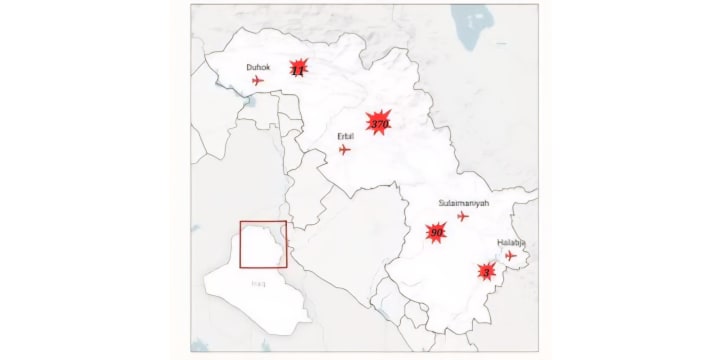
During the reporting period, the IRGC and affiliated militia groups carried out 179 and 295 attacks, respectively. Of these: 370 occurred in Erbil, 90 in Sulaymaniyah, 11 in Duhok, and 3 in Halabja.
These figures underscore a high frequency of attacks over a brief period, indicating that the Kurdistan Region is facing a systematic security threat rather than isolated incidents. The attacks utilized diverse weaponry and tactics:
• Suicide drones / UAVs: 359 incidents (75.74%)
• Missiles: 104 incidents (21.94%)
• Artillery shelling: 10 incidents (2.11%)
• Small-arms incident: 1 incident (0.21%)
Approximately 228 attacks—representing 60.76% of all drone and missile threats—were intercepted, neutralized, or failed to reach their intended targets. This demonstrates the effectiveness of defensive measures, yet highlights the persistent threat facing the Region.
5. Targeting Patterns
The attacks targeted a wide array of sites beyond military or security-related locations. Documented targets included:
• U.S. diplomatic and military facilities: 181 attacks (38.19%)
• Iranian Kurdish opposition groups based in the Kurdistan Region: 121 attacks (25.53%)
• Civilian areas and Kurdistan Regional Government institutions, including facilities linked to the Ministry of Peshmerga: 172 attacks (36.29%)
Strikes on the office of President Masoud Barzani and the residence of President Nechirvan Barzani in Duhok are considered particularly grave, marking an escalation from attacks on infrastructure and military sites to direct assaults on constitutional leadership.
The attacks also disrupted public life, with security risks leading to the suspension of education in schools, institutes, and universities.
6. Position of the Kurdistan Leadership
President Masoud Barzani and the Political Bureau of the KDP have articulated the party's position based on the following principles:
• The Kurdistan Region has refrained from participating in regional conflicts.
• The Region remains committed to neutrality, peace, coexistence, and stability.
• Persistent attacks targeting political leadership, civilian areas, and official institutions are unacceptable.
• Mere expressions of concern are insufficient; effective and decisive measures are necessary.
President Masoud Barzani has called on Iraqi authorities to make a clear determination: either acknowledge their inability to restrain unlawful armed groups or take concrete steps to safeguard sovereignty and prevent further aggression.
Similarly, the Political Bureau has appealed to the Federal Government of Iraq and relevant authorities to fulfill their constitutional obligations, ensure citizen safety, and protect the official and constitutional institutions of the Kurdistan Region from further attacks.
7. Recommended Actions
Based on the preceding analysis, the following measures require urgent attention from Iraqi authorities, political stakeholders, and the international community to minimize the risk of escalation within the Kurdistan Region and Iraq as a whole.
1. Immediate De-escalation: All hostilities targeting the Kurdistan Region, including those impacting civilian and governmental sites, should cease immediately.
2. Protection of Civilians and Infrastructure: Security protocols should be strengthened to safeguard civilians, residential areas, public facilities, airports, and critical infrastructure.
3. Safeguarding Constitutional Institutions: Attacks on leadership offices, residences, and government institutions must be recognized as serious threats to constitutional integrity and regional stability.
4. Federal Action by Iraq: The Federal Government of Iraq should:
5. Uphold Iraqi sovereignty
6. Prevent unauthorized armed groups from launching attacks from Iraqi territory
7. Hold accountable those responsible for such actions
8. Strengthen coordination with the Kurdistan Region on security and crisis management
9. International Monitoring and Engagement: International organizations, diplomatic missions, and relevant political actors should closely monitor the situation, support de-escalation efforts, and promote civilian protection and institutional stability.
8. Conclusion
The recent attacks signal a substantial and ongoing increase in security risks within the Kurdistan Region of Iraq. Data recorded as of 03/29/2026, including the deliberate targeting of leadership sites and vital infrastructure, confirm that the threat is significant and systematically organized, with serious political ramifications.
The Kurdistan Region remains dedicated to neutrality, peace, and stability. Regional leadership has reiterated its desire to avoid confrontation, but repeated attacks against its citizens, institutions, and constitutional framework are unacceptable.
For political parties, diplomatic missions, and international organizations, careful attention, accurate analysis, and principled engagement are essential in these circumstances. Protecting civilians, maintaining stability, and preventing further escalation must be prioritized.
Prepared by:
Foreign Relations Office
Kurdistan Democratic Party
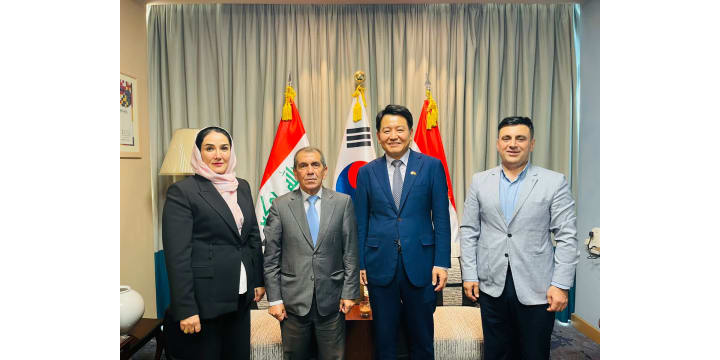
KDP Delegation Visits the Consulate General of the Republic of Korea